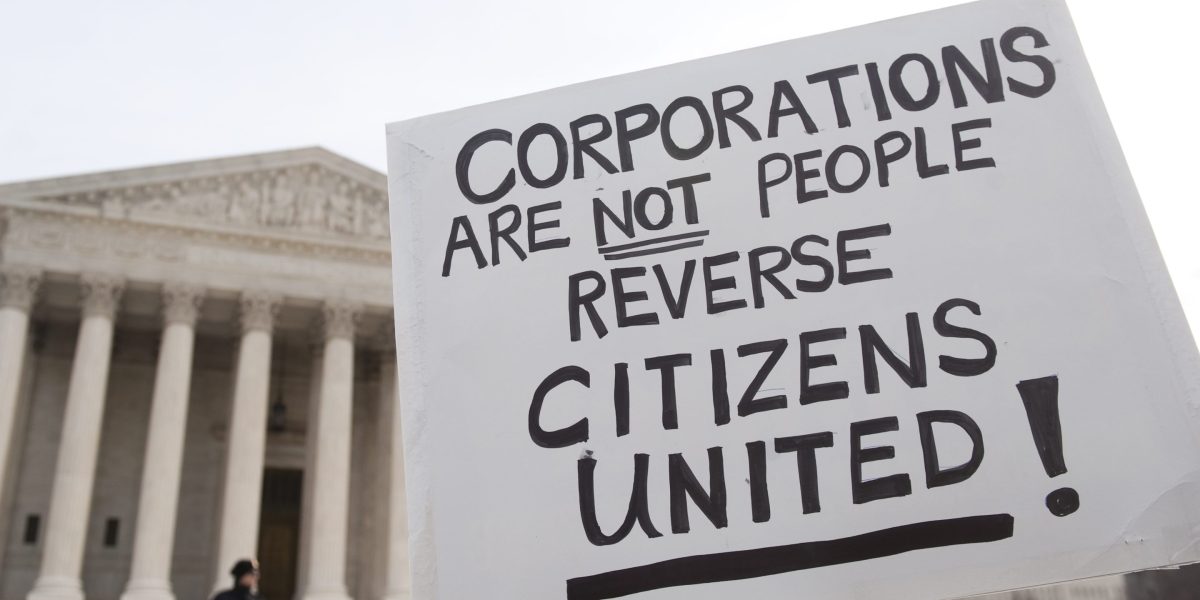
A Battle Against Corporate Political Spending
In a move that has captured national attention, Montana voters have taken a stand against the influence of corporate money in politics. Initiative 194, or the Montana Plan, aims to strip corporations, trade associations, and nonprofits of their legal power to spend money on political campaigns and ballot initiatives within the state.
This bold initiative has sparked a heated debate, pitting supporters who see it as a way to circumvent the controversial Citizens United ruling against critics who argue it violates the 2010 Supreme Court decision.
Redefining Corporate Powers
Rather than an outright ban on corporate political donations, I-194 takes a different approach. It proposes to change the powers granted to corporations and other entities, limiting them to only those deemed "necessary and convenient."
The measure would apply to any organization doing business or holding property in Montana, excluding PACs, news outlets, and individuals. Violators would face the loss of privileges, including limited liability protection, granted by the state.
A Legal Theory with Teeth
Tom Moore, a legal expert and architect of the Montana Plan, argues that states have the authority to regulate corporate behavior through corporate law. He believes I-194 would effectively shut down dark money spending by preventing wealthy donors from hiding behind undisclosed organizations.
"It's not regulation; it's redefinition," Moore explains. "This measure would cut off the route for corporations and nonprofits to engage in political giving, while still allowing individuals to donate."
Critics Weigh In
Opponents of the initiative, including former FEC chairman Bradley Smith, argue that the distinction between banning corporate political giving and restricting their rights is unclear. They believe states cannot sidestep the First Amendment by redefining political spending as a corporate power.
"The Supreme Court isn't playing a semantic game," Smith asserts. "States can set rules, but they cannot force corporations to surrender constitutional protections."
Montana's Historic Fight
Montana's battle against corporate influence in elections is not new. In 1912, the state passed the Corrupt Practices Act, aiming to curb the power of mining giants like Amalgamated Copper. However, the Supreme Court struck down this restriction in 2012, citing Citizens United.
A National Movement?
While Montana's initiative has gained traction, it is not alone in its efforts. Hawaii has enacted a similar law, Act 11, which is now facing federal lawsuits. The outcome of these cases could set a precedent for states' ability to use corporate law to restrict political spending.
The Supreme Court's Role
Whether through I-194 or the Hawaii lawsuits, the issue is likely to reach the Supreme Court. If approved by voters, I-194 would take effect on January 1, 2027, unless blocked by the courts.
A Step Towards Reform
"This is often how amendments can begin," one supporter commented. "If enough states pass similar amendments, it could lead to a congressional amendment."
Another observer noted, "Spending unlimited money to influence an election is not a first amendment right."
As the debate rages on, Montana's initiative serves as a catalyst for change, challenging the status quo and sparking a national conversation about corporate influence in democracy.
The outcome of this bold move remains to be seen, but it has undoubtedly ignited a fire under those seeking to reform campaign finance laws.

